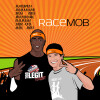
RaceMob Rewind: How This Latin Star Overcame a Drug Addiction With Running with Leo Rosales
#69 - Hey there RaceMob crew. We're celebrating Latinx heritage month with some incredible guests. So stay tuned for some amazing stories over the next few weeks, but we'd be remiss to kick off the month if we didn't bring back one of our favorite episodes from this last year and one of the most popular from all of you.
Read the transcript
Leo Rosales: And then feeling
that feeling of despair
and of sadness that I had
let, not only myself down,
but my family, my kids.
And then years later after
my will in my life, over
to the care of God, as I
understood it there, I was
standing at the Archway of
the 2014 Boston marathon.
And I was like, man,
miracles do happen.
Kevin Chang: Hello and welcome
to the RaceMob podcast.
This is episode number 69.
I'm Kevin entrepreneur
technology and fitness nerd.
And I'm joined by the
head coach of RaceMob
and master motivator, the
incomparable Bertrand Newson.
Hey there RaceMob crew.
We're celebrating Latinx
Heritage Month with
some incredible guests.
So stay tuned for some amazing
stories over the next few
weeks, but we'd be remissed
to kick off the month.
If we didn't bring back one
of our favorite episodes from
this last year, and one of the
most popular from all of you.
When Bertrand met Leo over
20 years ago, he had no
idea that this unassuming
handyman was dealing with a
crippling back condition and
a debilitating drug addiction.
Nor could he imagine Leo's
backstory a former Latin rock
star and the percussionist
for the group Malo at the
age of 18, Leo was being
whisked away via limo and
private jet to famous venues
like Carnegie hall, American
Bandstands, Rolling on
the River, and much more.
Leo's life is so fascinating
that it was even documented
in an ESPN Deportes feature.
From the highest of highs
to being so broken, he
could barely function.
It got so bad.
His family staged
an intervention and
forced Leo into rehab.
But it was here and shortly
after at Skyline College,
where Leo began to rekindle
his passion for running.
A passion.
He almost completely threw
away due to his addiction.
But was now ready to embrace.
Leo and his wife, Virginia
joined the Dolphins
South End Running Club.
And today have logged over
17,000 miles, attended
hundreds of races, become
Brazen Streakers, qualified
for Boston and have been
sober for over 16 years.
But most importantly, Leo and
Virginia have now become pillars
of the running community.
Spreading their love and
positive message to everyone
they meet, especially those who
are struggling with addiction.
And they've even become
running coaches, inspiring the
next generation of runners.
Best of all, Leo never
lost his passion for music
and is performing with
his new band Momo Tombo,
and they are killing it.
You're going to love this
story from the heartache, the
perseverance and the triumphs.
So here we go.
Bertrand Newsen: Welcome
to the race mob podcast.
And we're very fortunate
today to have Mr.
Leo Rosale is
accomplished marathoner.
Boston marathon, or that
is, someone who discovered
renting later in life.
And his story is
incredibly profound.
We'll take a journey through
his life, through his
eyes, the ups and downs of
life, much like a marathon.
There's always
points of adversity.
And we get to that emotional
crossroads, whether it's to
go to stop, to put one foot in
front of the other and Leo's
stories incredibly compelling.
And he'll share with us Leo.
So.
Fortunate to have you with us.
Welcome.
Leo Rosales: Nice to
see both of you again,
Kevin Chang: Welcome
to the podcast.
Leo Rosales: Yeah, thanks.
Kevin Chang: Before we
even started here, we were
listening to some music,
some fantastic music.
Tell us about this.
I mean, accomplished
musician that should
have been in the intro,
accomplished musician as well
Leo Rosales: Before I got into
running many, many, many years
ago, I was fortunate enough to
be introduced to a group called
Malo back in 1971,72, as we
were growing up, we're starting
to pick up instruments, we're
starting to learn how to play.
And everybody started getting
interested in , different
instruments, because at that
point in time, the summer of
love was around the corner,
you know, around 68, So we were
watching all of this unfold.
And so we all started getting
interested in playing music
and eventually I developed
the ability to play percussion
drums, conga as invalid.
And, um, there was a group
in the Bay area called
the Malibu's, who were
playing at this club down
off of silver Avenue in San
Bruno, in San Francisco.
And, uh, we used to go down
there and a friend of mine, a
brother wanted to expose us to
some different kinds of music.
Well, actually we would
go there every weekend.
You know, we get a fake ID, you
know, getting through the door.
And then he would introduce
us to the band members
and say, Hey, can these
guys play a song with you?
And at first they were hesitant
because, you know, they have
their own thing going, but
eventually because of he
persuaded them, you know, please
just give this guy a chance.
You know, he's young,
he's from the Bay area.
So they'd allow me to
come up on stage and play.
So I learned some tricks
up there and eventually
that group went on to.
Get a recording contract.
A friend of a friend got ahold
of this producer who brought in
a person from Warner brothers.
They came in and saw the band
and loved the band and signed
them to a five year contract.
. They went on to record.
And while they were in
the studio, then you had
some personnel changes.
The singer are Sileo
Garcia, who just a couple
of weeks ago, passed away.
You know, after keeping the
name all going for over 50
years, he gave me a call
and said, Hey, everybody
likes the way you play.
You know, you've come down
to the club and participated.
He goes, how about coming
over and auditioning with us?
We've got a record contract.
We'll get ready to
go out on the road.
We've got a hit single
coming out on the radio.
And I was, you know,
intimidated by all that.
So I said, well, I think I
want to make it on my own.
I got my own band.
And, uh, you know, we're gonna,
you know, we're writing music.
We want to go and he
goes, but you know, we
already got all that.
I'm saving you a lot of work.
You can come into our band.
We already got a contract.
We're going out on the road.
We got hit single, you know,
it's going to be fantastic.
So I went down there,
audition for the band.
And, uh, got the gig.
And from there on all of a
sudden I was driving around
hearing the Malo band of
the radio stations that
were , famous at that time,
like AMK Y a K FRC, uh, K DIA
K Sol, and then on FM KSAN.
But all of a sudden I was
like super popular, still
a senior in high school
at Balbo high school.
And all of a sudden I'm
getting picked up in front
of the school and a big old
stretch Cadillac, you know,
and , starting to get treated.
In a special way, you know,
taking the music stores,
buying instruments, you
know, rehearsing every,
every day and then preparing
to go out on the road.
So I spent a year and a half
out on the road and it was
an amazing one experience.
We did the last days.
It's the Fillmore
album with bill Graham.
We played at winter land with
Tito, with black Oak Arkansas
with, uh, black Sabbath with,
uh, all these heavy hitters,
10 years after Quicksilver
and playing in Carnegie hall.
We headlined Carnegie hall.
We played central park.
You open up for, I continue
to Turner at the long beach
arena, you know, uh, we were
being whisked off in Lear jets
from San Francisco to LA and
I was only like 18 years old.
All of this fame and fortune
was just kind of spinning, uh,
not out of control yet, but
it was spinning pretty fast.
And so that's where my
music career started,
started very young.
I kept staying in the music
circles and you know, just
like if, if you really have a
desire for something special
in your life and you have a
dream, you got to follow the
dream, following the roads
that leads to it, you know?
By putting yourself with the
right people in the right
place at the right time and
making all the sacrifices
of playing as much as you
can, wherever you can.
And eventually you make
connections here and there,
and it takes a little bit of
time, but I managed to follow
my heart and follow the dream.
And I managed to hook up with
Malo and had a nice career with
them for a year and a half.
And then, you know,
life started taking it.
Turns.
And I started making
choices that led me
down different pathways.
So I hope that conveys what
my journey was in music.
So I'm still playing now.
They're still playing now,
you know, years later,
unfortunately under this
COVID-19 semi sheltering in
place that's going on right now.
We had 15 shows lined up in
2020, and unfortunately each
and every one of them got
canceled due to this situation
that we find ourselves in.
That's my little story
of my musical journey,
Bertrand Newsen: A little story
regarding the musical journey
and being, let's look at your
life as a, as a marathon and
your love for music and the
exposure you had, the life
experience, it had, how the
trajectory had put you on.
Let's look at it as a.
A race of life and you got
to an aid station and maybe
start it out a little quick,
you know, and needed to kind
of catch your breath and kind
of transition from that point.
You know, Leo young man with
some very talented musician
towards the world, popular
band, then you find yourself
away from the group and doing
your own thing and then kind
of the, the life's adversities
and where your pace started to.
Change a bit.
And you're looking
to find your rhythm,
Leo Rosales: speak to that.
How do we get to the running is
the beauty of the whole story.
How running turns out to be like
a spiritual advocate for you.
You know, so during that period
of time in Malo, when I was
playing, I didn't have mentors.
That were spiritual leaders
that could guide an 18 year old
through all of this fame and
fortune through all of this, you
know, this money and adulation
and being on television and
being on the radio and seeing
your poster of your record at
tower of records, you know,
and it's just a lot to take in.
And, um, without somebody
guiding you through those
experiences, You can have the
tendency to connect with the
wrong people, start making
wrong choices, which will
derail you from the path that
you've been set upon life.
Set me on this extra
or this extra ordinary,
uh, gift of music.
And, um, you know, when I
first I started to take off or
to give, I really was trying
to be positive and to be
grateful for the opportunity
that was given to me.
Playing it all these great
places playing with these great
musicians and, you know, so
along that journey, you know,
all of the other accesses
that are available to you,
like alcohol, drugs, uh, you
know, uh, relationships with
different people and which
in the beginning, when you
think that that's all good
and all cool, you know, there
are some people that can
survive that, you know, they
go through a lot of turmoil.
In their journey because
you know, maybe they're
still young and they got a
lot of oats to show still.
So they begin to, you
know, really go off the
rails and those, some
of those people survive.
They can wake up one
morning and say, man, you
know, I'm good with it.
You know, I don't want
to do that anymore.
You know, I'm going
to get married.
I'm going to have kids, you
know, I'm going to put this
money in the bank, I'm going
to buy a house and I'm going
to put my kids in college.
There are those.
Very select group
that can do that.
Unfortunately, I was in the
group that I got consumed
with the excesses, um, the
line light, you know, the
ability to smoke a little
more weed, you know, snort
a little bit more cocaine,
drink a little bit more scotch
and couldn't put all those
things in the right cupboards,
you know, so eventually.
Those became accesses.
And unfortunately they started
to consume my thinking.
I started to become, uh,
instead of being obsessed
and compelled to practice the
drums and to play music and
to surround me, myself with
people that would help me.
To be a better musician and
set me on a course, . So by
the time I was into the music
for a couple of years, that
obsession, that compulsion
started to become negative.
And I found myself becoming
consumed and obsessed with
wanting to drink more.
Wanting to party more.
And before I knew it, that
became the most important thing.
. And then that is what caused
me to leave the band because
I was so insecure about
my behavior that I tried
to find some redemption.
And that scared me into going
to another extreme route.
And then I got involved in
religion and I got involved
in a situation with them group
that ended up as far as I'm
concerned, became a cult, you
know, because it was a very.
Close minded, fanatic,
indoctrinated, Bible
teaching organization, that
it was, you know, very, you
know, and time apocalyptic
thinking and preparing.
I hung in that for 10 years.
And in that period of time,
I was, as I say, In the rooms
of alcoholics anonymous,
white knuckling, it, you know,
, you're just like , you're
keeping yourself from doing it.
You still have that obsession
with it, but you have, you
managed to have a little bit
of strength to fight it off.
and all of a sudden I
found myself in this place
and I wasn't happy there.
And then eventually that
turned sour, you know, we were
preparing for the end times and,
you know, moving up into the
mountains and preparing food
and this, that, and the other.
And before.
For, I knew it.
I was like completely
disillusioned and left that
all behind came back into
trying to live a normal life,
getting a normal job, but the
music was always resounding
in the back of my mind.
Cause that's what my true
love was my first true love.
Right.
So when I came back into the
scene, I had been out of it
for 10 years and I tried to get
back into where I had left off.
And it was just impossible
because everybody in 10 years.
A new generation of
musicians had grown and
they had gone to college.
They had gone through degrees,
they got their PhDs, they
were in the recording studios.
They were traveling the world.
And that was this guy who
had left the music scene,
tried to get back into it.
And all the doors were closed.
Everybody had graduated into
the college realm and I was
still, I felt like I was still
in elementary school, you know,
so I tried to get an edge on it.
And I went back to those
ideas that I thought were
were helpful, which was.
Negative behavior, which
is, you know, what to the
old places hooked up with
the old friends and got
back to the old behaviors.
And before I knew it,
I was full fledged back
into doing drugs again.
And that lasted
for over 20 years.
And it escalated from, you know,
smoking weed to hanging out with
people that I knew had cocaine.
So then I was doing that
and before I knew it, I
was completely crushed.
Got divorced.
My family moved.
I was all alone.
And you went into relationships
that weren't working.
And finally, you know, thank
God I found the right person.
And, you know, just to say,
we've been together now for
over 34 years, but that journey
until, so the running became
something paramount in my life.
Uh, there was a lot of, um,
a lot of sadness, a lot of
despair because that dream that
I had brewing in my heart was
crushed by all of my decisions
in life that I had made.
Kevin Chang: Talk about running.
Let's talk about how'd
you get into running
Leo Rosales: I
got into recovery.
I ended up at skyline college
and in that place, because I had
had a great experience prior to
that running the beta breakers.
So I remembered.
That running was very fulfilling
and that I really had a
sense of accomplishment just
for seven and a half miles.
Kevin Chang: When did you
run the beta breakers?
Leo Rosales: I would say
maybe the first time I did,
it was maybe 19, maybe 1990.
Yeah.
Around 1990, exactly.
Somewhere around there.
I ran that one race.
And then I didn't run again.
It's all about 2005, but what
happens at with skyline college?
I met a gentleman, uh,
the teacher and, um, we
signed up for the class
because I remembered that
I really enjoyed running.
So by this time I'm in
recovery and I'm clean
and sober and my mind is
clear and I have set goals.
So he told me that the
class wasn't big enough.
So we had to cancel the class.
But we're going to do
weight training, but you
can still go out and run.
So I did that.
It followed her suggestion.
And then I went online
and I signed up for the
next day of beta breakers.
And I ran that.
after that was such
a great experience.
All the people, you know,
sober and feeling like,
wow, this is amazing.
You know, uh, you know, the
starting line and running
and, and just, you know, being
competitive with people that
are out there and you're trying
to, you know, do your best.
And, you know, you got
this attitude of not giving
up and running your best.
So after that was over, I went
home and I told my wife, I said,
Hey, I want to do another race.
I said, I heard of this
thing called a marathon.
I'd like to try it.
And she goes, well, do you
know how many miles that is?
I said, no.
I said, I could do it.
She goes, well, it's 26.2 miles.
I said, she goes, that's
what a marathon is.
She goes, you just ran
seven and a half miles.
I said, no, I can do it.
I think I can do it.
She goes, don't you want
to do like a half first?
I said, no, because when I'm
finished, there'll still be
people running and I'll feel
like I'm losing out somehow.
So crazy.
I signed up for the San
Francisco marathon and.
I trained, I think for like
maybe eight weeks, you know,
I knew nothing about it.
I didn't know any rules.
I just put on my shoes.
I lived in Pacifica and I
just started running around
Pacifica, you know, and I
thought it was a big deal that
I ran three miles, you know,
four miles and five miles.
And I tried to increase
the mileage and eventually.
You know, I ran the San
Francisco marathon and I
did it in my first attempt.
I did it in four
hours in 25 minutes.
Bertrand Newse: Congratulations.
Kevin Chang: Why don't we
back up a little bit, because
I think we glossed over the
whole subject of you getting
clean and that whole process.
You know, you found your
old friends, you went
back to a old place.
You did the beta breakers.
I'm assuming somewhere
in that period of time,
Leo Rosales: what happened
was I was using so much
that I just was starting
to feel out of control.
So I thought I could
do it on my own.
So I stopped.
I stopped hanging out
and I stopped going
places and I started to,
um, try to get healthy.
And then I read somewhere
that there's this race
coming to San Francisco and
they have it every year.
And I had seen it when I worked
at the hotel, you know, that
the beta breakers was coming.
So I decided to do it.
So I signed up for it and
I started training around
South city running and, you
know, it was short distance.
So I really felt empowered
by it and I, and it, and
the preparation for it.
And then showing up at the
race was just an incredible
sense of community.
And.
I felt like I was really
involved with something that
was super powerful and positive.
Everybody was friendly.
Everybody seemed like
they had, we had one goal
in mind is to run this
race and I read up on it.
So I ran the race
during the race.
As I was coming to the finish
line, I made a reservation in
my mind that I was going to
celebrate this accomplishment
and what I did instead of going
and doing something healthy,
I went and celebrated by.
Visiting the drug dealer, you
know, I thought that I could go
there and celebrate, you know,
just one night of celebrating.
But as I say, I was the first
to get to the party and the
last one to leave while that
was a wonderful experience that
seared in my heart as something.
Powerful to do the waking
up the gorilla in the
cage again, by going and
starting up with the drugs.
Again, me and from that from
after running the beta breakers
on Saturday or on Sunday that
night I went okay and celebrated
by consuming drugs again.
And that stayed with
me for over 20 years.
That's how powerful the
power of addiction is.
Once you opened the door to it
again, once you've closed it.
Or you think you've closed
it, uh, unless you have
the proper experience,
it's hard to shake it off.
So that lasted for 20 years
until I ended up in covering
at a facility in Oakland
and they helped me by when
I left there, I relapsed.
And during that time of
relapse, my mother passed away.
I was at the crossroads, all
the tools that I had learned
at as a recovery facility, I
put it in my spiritual tool bag
and was encouraged to always
know that that was there.
Even if I relapsed and found
myself in a dark place.
So after my mom passed away
and I went back to work, I
found myself there in that
dark place and, uh, utilize
the tools that they gave me.
A spiritual tools of how to ask
for help as spiritually first.
So that's what I did.
And I reached out to my higher
power and I asked him to, you
know, to relieve me of this
obsession compulsion to use.
And that's what I did.
And from that day forward, it's
been, that was December 8th.
And it's been 16 years
that I've been clean and
sober and free from all
substance, very proud of that
accomplishment 16 years ago.
And in that process of
being, you know, uh, in the
meetings, people would tell
me, you'll find out what
you're going to do next.
Just keep going to the meetings.
You know, don't use in between,
sit in the front row, wait
for the miracles happen.
And that's what happened.
I went to a meeting and a
woman shared her extraordinary
experience down through
the life of addiction.
And then she said how she
went back to school because
of the rooms of narcotics
anonymous and the support
that she received that is.
The message that I received.
And from there, I started
to go back to college.
I went to skyline college that's
where I met Sonny Diaz, who was
the teacher for track and field.
And, and he's the one that said,
even if we don't have a running
class, I want you to run.
You go out to that track and
you run all your, you want you
to just sign in, do a little
bit of cardio, go outside.
And then from there,
there is the running.
I started feeling empowered.
Like I could do this, you
know, running was something
that felt innate in me that
it was this little DNA.
They needed to be turned
on, you know, that it was
there, but I didn't know it,
you know, cause I enjoy, I
enjoyed running in high school.
I never ran on the tracking
cause we were all playing music.
I remember getting on the
track and running around and
feeling like, man, this is cool.
You know, I like this, you know,
so I had running experiences
throughout my life and then
that beta breakers that I ran
and then relapsed for 20 years.
The power of running the power
of that experience, seared
in my brain and in my heart.
So one of the first things
that I went through when
I got sober and clean is I
said, I want to run again.
I want to run again, even if
it's just like college, you
know, joined the team there.
And before, you know, it running
became a saving grace for me
because all of a sudden I was
involved with running groups.
The DSC was dolphin,
South end running group.
That's been around since
1964 in San Francisco.
And then somebody there told
me about brazen racing, which
was trail running, you know,
five K, 10, K, half marathons,
and all of a sudden, all
of these things that were
just all this positive,
reinforcing and empowerment.
We're being like a gift.
Like you can run with the GFC,
you can run with brazen racing,
you know, the Boston marathon.
I was like, Oh my
God, this is great.
I substituted addictive
behavior and negative behavior
for positive behavior.
And people say, Oh, you're
addicted to running now.
I said, no, you don't.
I don't like to use
that word addicted.
It's kind of like a
negative connotation.
You know, I substituted bad
behavior for good behavior.
You know, I've been
running now for 16 years.
I've done over 50 marathons.
I've done probably the excess of
over a hundred half marathons.
I've run the San
Francisco marathon.
13 times I've run the
Boston marathon four times.
I've run ultra marathons,
12 hour endurance running.
.
You know, I became a coach.
So running.
Has been like my best pal.
Kevin Chang: If you like our
podcast and sign up for our
newsletter, where we give you
weekly tips on how to run your
best race and have fun in the
process, just go to RaceMob
dot com and sign up today.
Bertrand Newsen: Let
me interject here.
Our listeners don't know that
I've known you for 24 years.
We are all in life or
we're on our own race.
And sometimes on the
course, our paths cross
our paths cross in 95, 96.
And I knew you as a kind.
Individual.
We worked together in the hotel
business at San Francisco.
Um, but I knew that you were
in pain and at the time I
thought it was just a physical
pain because you were having
some significant back issues.
And in some cases we're
taking you out of work for
extended periods of time.
As life went on, I, I
eventually left that hotel
and stayed in the business.
We stayed in contact, um, but
more just in passing, we had
common friends, relatives.
We both know, but years
later, much, like I met Kevin
through my love of running
our paths crossed again on
a race course of all places.
I knew the face, the person at
his core hitch, there had been
a metamorphosis and emotional
and physical metamorphosis.
And then to learn your
story, because at the time
when I knew you back in the
nineties, I didn't know you
were an accomplished musician.
I learned that later in life.
But our common love for running
and how it's afforded you so
many new experiences and a
greater circle of positivity.
And then the impact that you
have had on the community from a
running perspective is profound.
An ambassador of the sport,
both you and Virginia.
Loved by so many and your
accomplishments as a very young
and thriving 60 plus year old
individual, a gentleman who
on the San Jose rock and roll
half marathon in the let's.
See, 2013, 14, thereabouts.
You're outrunning.
Roger Craig, the super bowl,
winning pro bowl, running back
for the 40 Niners who should be
in the hall of fame of my dad.
Leo Rosales: Yeah, absolutely.
Bertrand Newsen: Get this dude.
I mean, fantastic.
And again, the parallels of
art, the journey of life, the
race that we're all on there,
parts even in actual races,
when you just can, if you
can just stop and be present.
And realize that somebody
else has their own
story, their own journey.
It may not be going to
Boston, but it may be this
getting to that finish
line and the adversity.
And they've had to navigate
through to get to that point.
We can all relate
to a certain degree.
So I just wanted to share that,
you know, I've had a firsthand
seat at parts of your journey
of life and it was just.
Simply remarkable to
where you are at right
Leo Rosales: now.
Thank you for those
kind kind words.
I love you.
And I cherish our relationship
and I appreciate your kindness.
Running is a
spiritual experience.
You know, I've learned in
the program, you teach by
example, you know, you can't
become a Sergeant at arms,
you know, and try to get
everybody to, you know, do
things that you think is
better, whatever it is that you
think is better, you live it.
And you, you live that.
That way so that they could
see you and when there's
consistency, and then that
changes the perspective
of what others have.
You know, like now I
have, my daughters are
like, finally, dad, you
know, you got us running.
We've been trying for 15
years to get him to run.
All right.
One day they'll come around.
And all of a sudden it's
like, Oh, my daughter signed
me up for the chocolate
run and hugging her and
saying, look, who's here.
She's running with this.
Now we've been trying for
years to get them to run and
they see, you know, how that's
changed our lives and the
positivity that it's brought.
You know, that's why I'm
grateful every day to have
legs, to have arms, to, to,
you know, to be able to go.
Even I've torn my planters.
I popped my planters.
I had back surgery,
osteoarthritis, and one hip,
but man, If I can, I'll still
go out there and I'll try it.
You know, I may not be able
to go as far, but I'll stop,
regroup and keep on moving.
I figured if I could overcome 16
years of substance abuse, cause
I was very, very sick running.
You know, it's just like it's
life, you know, you start out
at the starting gate and there's
many times along that race where
you just want to call it a day.
You know, like when we did
that, Santa Rosa, you and me
Bertrand Newsen: 2018.
Leo Rosales: Oh my
Bertrand Newsen: God.
No, we're running in a Hill
for a moment when it was the
one country, but it was hot
as, you know, what burning up,
Leo Rosales: catch him.
And we'd be together
for a little bit.
And then I just like fall and
then he would just take off.
And I see him in the
distance later on.
I catch up to him again
and I'd leave him and I
go on the distance , and
it was just like that cat
and mouse the whole way.
I mean, I would have
finished the race regardless,
but I think because of.
His tenacity and his just like
running like a soldier, man.
He was just like,
boom, boom, boom.
And I just would draft
behind him and just try
to stay in that space that
he was in . He was like a
mentor out on the course.
Like, don't give up,
dude, you could do this.
You know, I mean,
that's what running is.
there's so much that goes
on so much mental chatter
in your head that is
like, Oh, I'm so tired.
I want to quit.
And they have those little
moments where the chemicals
the dopamines the serotonins,
you know, all are pouring
in , and then you're back.
It's an amazing, amazing sport.
I met so many tremendous
people along the way,
and you know, running the
Boston marathon, running
the San Francisco marathon,
Kevin Chang: let's not gloss
over the Boston marathon.
I mean, you're wearing
that jacket right now.
That 20, 20 Boston
marathon jacket.
Bertrand Newsen: Yeah.
Leo's not getting out there.
Just participating to be clear,
to be clear, everybody listeners
he's out there with the purpose.
Yes.
He's a man in the community, you
know, I'm that artists at heart.
But he is a Savage
on the course.
He is looking to run you down.
And as much as he says,
we're playing cat and mouse.
Usually I was all the time
chasing him down and I
couldn't could not rotate the
brazen races, multiple age
group winner, placing on a
consistent basis, multiple time,
Boston marathon participant.
I remember seeing your journey.
Via social media in your,
when you've very first
qualified for Boston.
So take us back to chasing
down that dream and then
being in Boston, you know,
Leo Rosales: briefly, you know,
after being in the running
circle, you start hearing about
all these tremendous races
around the world, the big six,
you know, the Boston, the San
Francisco and this and that.
So I heard.
Yeah.
If you want to do Boston,
you have to qualify for it.
So a couple of years into
running, I made the attempt
and I would just, you know,
I fall short by five minutes,
10 minutes, you know how
to make a bathroom stop
and that killed the time.
And so, but somebody
said, just keep trying.
You'll get there.
You'll get there.
And then finally, someone
when I was 59 years old,
said , if you can beat three
55, be 60 years old on race
day, you can do it at 59.
You understand what I mean?
the qualifying time
for 60 to 64 year olds.
It's three hours and 55 minutes.
You can qualify for
that time being 59, if
you are 60 on race day.
So I said, okay, so that
gives me another five
minutes on the clock.
So brazen racing has a race
called Western Pacific.
It's totally flat.
It's in Fremont.
Cory lakes, Cory lakes, it's
got gravel, asphalt, gravel,
asphalt, or 26.2 months.
It's not running in the street
a little easier on your legs,
but still it's a little harder
because you have all that
loose gravel on the road.
So I ran that race with my
heart in mind that I wanted
to qualify for Boston because
it was a Boston qualifier.
So I got in front of
the three 55 finisher.
No in the middle of the three
50 and the three 55 pacer.
And I set myself
in between them.
I ran the race like that and,
uh, we got to the turnaround.
I was feeling strong and I
was maintaining that position.
Then when we went out all
the way to like mile, I
think it was like mile 20,
23, 24, where there was a
turnaround, the three 50 pacer.
Was right on my tail.
And he had seen that I was,
you know, keeping that pace.
So when I made the turn and
I was heading back to the
finish line with three miles
to go, he passed me and he
says, I'm catching up on you.
He says, you better step on it
just cause we'll make the turn.
We're going to be
right on your table.
So that pushed me.
And I remember thinking.
I was already packing
my bags to go to Boston
in my mind, you know?
And I said, no, no,
no, don't go there.
And I started to get emotional.
I started to feel this
emotion wanting to, to cry
out of, you know, out of joy.
And I said, calm down, dude.
I said, keep it calm, bright.
When you cross that finish
line, keep it together.
You got another three
and a half miles.
And after doing 23 miles,
Three miles seems like, Oh
my God, legs are burning.
Lungs are burning.
It's hot outside.
So I just say, stay focused,
stay focused, stay focused.
So I went over, uh, he was
behind me and I could hear them.
I could hear their footsteps.
So I was just like, you know,
giving it all that I got.
And then when I saw the finish
line, You know, I stepped
on it and, uh, across the
fence with the three 53.
So I managed to
qualify for it, Boston.
And I was like, beside myself,
mad, I couldn't believe it.
Did I accomplish that?
Which year was this?
This was in 2013.
Cause I call it for the
2014 Boston marathon.
As soon as I told my wife she's
on the phone making reservations
and I said, wait a minute, they
haven't approved of it yet.
She goes, yeah, but they're
going to, so, you know,
airplane and you know, hotel.
And then I, I sent the
time in and then I got.
The qualification saying
you've been accepted into
the 2014 Boston marathon.
So that was a big deal.
Kevin Chang: And this is
basically 10 years into
getting into running.
It's the hard work.
It's the perseverance
over those 10 years.
Tell us, what was your time
when you first got into running?
How did that time change and
what were those emotions?
Leo Rosales: I was
doing a lot of running.
I was running with DSE, so that
those were a case basically.
Sometimes 10 Ks once every
six months it would do I half
marathon at like were said,
but the meat of DSC was five
Ks, fast, five case every
Sunday, 52 weeks of the year,
minus the beta breakers,
the San Francisco marathon.
The bridge to bridge, you
know, but so 48 weeks of
the year was DSE running.
Every Sunday you show up and
there was always competitive.
You're always has,
you know, you stretch.
And I used to sneak up to the
front of the line and then
these guys would take off and
I'd be like up in the back.
so every Sunday was speed work.
And then with DFC, I
mean, with brazen racing,
that was trail running.
So this is going up and going
down and going across and over
the water and over the bridge.
And.
You know, 13 miles
of hardcore running.
And this was a little more
exciting because it was
age group here, you know?
So if you were, you know,
60 to 64, that was your race
with those other competitors,
you know, the women had their
side and the men had theirs.
So when I started, you know,
first place, second place, age
group, that motivated me that
every time I ran, I had that
competitive spirit in me, you
know, a healthy competitiveness.
To try to, you know,
always get in first place.
So that running took place.
And then Virginia
got us involved with
coastal trail running.
And this was like, you know, 50
Ks, you know, running 30 miles.
So we started doing that.
So all of a sudden, you know,
we're running, we're running
Thursday, we're running Friday,
we're doing races on Saturday.
We're doing DSE on Sunday.
So the more I ran, the more
I started to pick up speed.
So.
My best marathon
time was California
international marathon CIM.
And I did that one in my
best time, three hours,
45 minutes and 10 seconds.
And that was perfect day,
the perfect day of running.
And I would go to
the track and do it.
Speed work, you know,
intervals, you know, part.
You know, 800 meters splits
and I would work with, um,
Andy Chan, who is the track
and field coach at sacred
heart in San Francisco.
He's trained Olympians,
he's trained, qualified
wires to go to the Olympics.
So he's a great motivator
and great trainer.
And we would meet at keys,
our stadium and do it.
You know, six, 800 meters
splits, you know, and I saw that
by doing those splits, those 800
meters that might try and just
start getting faster and faster.
And there was, you know, there's
been experiences running where
I felt like I was flying.
This is just terrible
feeling, you know?
And it's not there all the time.
Most of the time it's work.
That's how, at that time, where
there was a lot of running
going on and that served as
good training for picking up
speed, 10 years of running
and finally Boston qualifying.
What was that?
Boston experience?
Ordering the jacket and then
having the jacket and then
getting on the airplane, wearing
a Boston marathon jacket.
Oh, I go to the Boston
marathon, right?
Yeah.
People like noticing, Oh,
you're busting runner.
Yeah, it's just my first time.
All cool man.
Right on, you know, so, and
then getting to Boston and,
and saying, man, I made it or
thinking of all the adversities
that you've overcome and to
find yourself at the grand
Prix of running the super bowl
of running to walk down the
street and everybody's wearing
a jacket and everybody's
training and running.
And you're like, wow, man.
I mean, this is a
big deal though.
I'm here, you know, and
then, you know, get to
get to the expo mega expo.
Oh my God.
It's just like, Just enormous
building consumed with running
every company that sells
shoes, every company that sells
jackets, every company that
sells who gels and sports drinks
and this and that, and this to
make you a better runner, this
can make you a handsome runner.
This can make you this rather,
and then meeting the Kenyan
runners, these like shaking
hands with these runners that
can do the marathon in like
two hours and 15 minutes.
You know what I mean?
All of that.
And then.
The dinner before the race,
walking down the street where
the race is taking place and
seeing the finished sign on the
ground and boil should Ave and
Boston commons, just like this
energy in the air was wonderful.
And then the bombing had taken
place the year before 2013.
So there was that air of
community in the air of
love and, you know, healing.
And, uh, were women from around
the country had knitted scarves
for all of the Boston runners
that were going to be running.
So you walked down the
street and there would
be the lady there with a
hand or an arm filled with
beautiful and knitted scarves.
And she said, are you
run the Boston marathon?
And he said, yes,
well, this is for you.
And she went to me and
there would be the signature
of the ladies that.
You know, we're from Kentucky
and we made this for you for
good luck at the run, you know,
a piece and blah, blah, blah.
And it was like, and then we
went to one of the churches on
Sunday morning and the pastor
of the church had all runners
stand up and said his beautiful
prayer blessing, all the
runners from around the world.
And I was like, wow, man,
this is just incredible
because I'd reflect like
we're lukewarm what as years
ago, and look where I am now.
Because life gave me
a second chance and I
grabbed a hold of it.
Right?
When I went on race day.
First of all, Saturday,
you have a fun 5k that
you do to Virginia.
And I have done the 5k,
you know, 14, 15, 16,
and 19 together at 10,000
runners come up for that.
And it's just, it's really
exciting, you know, and I
run with her and we have
a wonderful experience.
You know, you get
shirts and metals.
And then you go to the expo and
you walk a Boylston Avenue and
all the hooplah that's going on.
And then on race day, that was,
I had all my clothes laid out.
Yeah.
You know, taking pictures
of it, you know, FaceTiming
and all this and that.
And then when I got there,
you know, when we get to the,
just as welcome to Hopkinton
to the 2014 Boston marathon
and there's jets flying over.
And because this is after the
bombing, so you have army.
Standing there with their, with
their weapons along the line.
There's helicopters flying
over their snipers on roofs.
And it's like, you know,
but they're all really kind,
you know, the, the police
special forces, everybody
that was there to protect
the runners were very.
Compassionate and very
loving and very kind
to all the runners.
I took a picture
with 12 policemen.
I asked the one guy, can I
take a picture with you guys?
He goes, well, you can ask them.
I'll be glad to say, Hey
fellows, you know, you
guys might, and these guys
are like six foot tall
and I'm like five foot.
And I got a great picture of me
standing with, with the Boston
police department, you know,
so standing at the Archway of
the race reminded me of the
Archway that I stood at when I
went first, went into recovery.
I first went into recovery.
It was like a new bridge and it
was owned by William Randall,
the owner of the Chronicle.
This was one of his mentioned,
and he donated the mansion
to the city who turned it
into a recovery facility.
So that's where I was.
And there was the arch that
said, you know, new bridge,
you know, new life, new start.
And I'm like, you know,
had a drink and maybe
20 hours or something.
And then feeling that feeling
of despair and of sadness that
I had let, not only myself
down, but my family, my kids.
And then years later after
my will in my life, over
to the care of God, as I
understood it there, I was
standing at the Archway of
the 2014 Boston marathon.
And I was like, man,
miracles do happen.
We'll get to look where I am.
I'm turning around.
There's 30,000 runners.
There's all of this excitement
and I'm fortunate enough
to be standing there with
all of those runners.
And then when that, when the
guy says, all right, know,
here we go, boom, ready?
Three, two, one.
And we're on.
And we're going.
It was like, wow, this is a
dream I'm dreaming right here.
And I'm seeing the finish
line coming up the street
and then make it, I forget
the name of that street,
but there's a left turn onto
Boylston and you can see the
finish line in the distance
and it looks really tiny.
And I just remember like all in
the cheering, people cheering
and high five, and then, you
know, it's like, wow, this
is really living right here.
And each experience to
the Boston marathon was
just, was just like that.
You're running down.
If people have high five
and you, you stop and you're
high five, a little kid,
and you could see their
excitement, you know, like
some great, you know, Greek
athletes just shook my hand.
You know, it's a pretty
life changing experience.
And then to cross that finish
line and get that Boston metal,
you're like, Oh my God, you
know, you just want to get on
your knees and say, thank you
for giving me a second chance.
You know, and running has been a
tremendous part of our recovery.
You know, every time we go to a
different town, we look up where
the meetings are, you know, go
to New York, go to the meetings.
To always remember the
newcomer poor soul who
is fresh and recovery.
He hasn't done drugs in one day.
He's hurting spiritually,
mentally, and physically.
So you go to give support
the runners, you know,
I've never met a runner.
That's been mean to me.
You know, he'll say, how are
you doing, you know, run by me.
Cause I feel feels,
Oh man, falling apart.
Cause you can do it.
Come on.
If that aid station water in
you finishing, you know, do it,
come on now, you know, stick
with me, Dean Karnazes, doing
a Napa marathon, trying to
qualify for Boston on that one.
And he was there and
he's running and he
comes up next to me.
Um, well, D man, I do.
And he goes, how are you doing?
I said, okay.
He goes, I said, I'm trying to
qualify for the Boston magnets.
He goes, you could do it.
Just keep it up, keep it up.
Don't worry about it.
You got this.
So, and then he disappeared and
then I was running, running,
running, and then I started
falling apart around mile 18.
And then he comes again.
He goes, how are you doing?
I said, I don't know, man.
I don't know if I
can get this done.
He says, it's okay.
He says, there's always other
times he says, but don't quit.
Just keep it going.
Get to that finish line.
Just try your best.
Give it the best that you got.
That's all you got.
Don't worry about it.
And then he took off again.
So he was like a little
guardian, the mentor three
times he came up on me to check
up on me and I saw that he was
doing that throughout the race.
It was going up to people and
seeing how they were doing.
It's been an incredible journey,
uh, running, you know, I took
this time that we've had to
be in the sheltering in place
and it put up all our medals,
you know, strategically our
shadow boxes and thousands
of metals on the wall when
we walked down the hall and
I'll turn around and stop and
look at it and I'll say, damn,
look at all those medals men.
And so Virginia and I estimated
that we've probably we'd
done over 17,000 miles in
our 16 years of running.
Wow.
So running for me is a gift
from heaven, you know, from
the universe disability to
move my legs one in front
of the other one day at a
time, one step at a time, you
know, initial line is there.
If you keep moving, if you stop,
the finish line is not there.
Now we'll pop the
course and call a cab.
You got to get it done.
Even if, even if they close
everything down, you got
to cross it regardless, you
know, but don't, don't quit.
And , I safe to say
that I've never DNF.
Not that, that, not that if
that happens, that there's
something wrong with that
because there isn't, because
if you DNF is because something
came up that you just couldn't
deal with, but I've tried
to avoid that situation by,
you know, preparing properly
for a race and , doing
what need needs to be done.
To get to finish the race.
Bertrand Newsen: So profound.
Leo Rosales: Thank you.
Bertrand Newsen: Life
parallels, you know, I'm one
foot in front of the other.
We all are gonna deal with
our fair share of adversity.
Sometimes it's going to come
at the most inopportune time.
We were all living in the
pandemic right now, and they're
dealing with varying levels
of anxiety and wondering
will we ever be able to
get out and about like we
have before in the past.
And maybe not live racing, but
we can still get out and enjoy
a good run, taken our beautiful
area and just appreciate the
ability to take in a full breath
in and exhale out where so many
people who have been close to us
might not have that opportunity
and just have a greater
appreciation for where we're at
right now and keep on pushing
Leo Rosales: with the fire.
Thank God I got a treadmill
so I can run on that.
You know, it gets a little
stuffy because they don't
have fresh oxygen, but
it's just the point of.
That movement.
And now if I don't run and I
don't move starts affecting
my head, start feeling like
something's wrong, you know?
And then I talked to other
runners and it seems like,
yeah, I get that too.
So, okay.
I'm not alone.
No, not at all.
Bertrand Newsen: In fact,
don't you have a race coming
up in the next week or so?
Leo Rosales: Yes, I do
Bertrand Newsen: talk
about that real quick.
I know we want to respect
your time, but let's, let's
share about that race.
Do you have on there?
Leo Rosales: Well, luckily.
It's the, it's the Boston
marathon virtual race.
And they're giving you
six hours to get it done.
It's not a qualifier.
Uh, but if you get it done
at your own pace, within six
hours, you get your metal,
you get a shirt and you
get your certificate, you
know, and you get a bit of.
Just the regular stuff you
would get if you went to Boston.
But unfortunately I haven't
been able to train as much
as I would like, but speaking
with Virginia, she goes,
look, you've got six hours.
You can get it done.
You know, just find
a nice pace and I'll
support you on the bike.
You know, we'll, I'll create
a little aid station for you
and, you know, just go do it.
And I said, okay, you're
the bus, the trainers do it.
Yeah, so, uh, that's coming up
and, uh, I'm excited about it.
Bertrand Newsen: Let's listeners
again, an idea of where they can
listen to some of your musical
accomplishments, and we know
the pandemic has curtailed your
touring, but how else can people
find out your musical prowess?
Leo Rosales: If you want to
hear Malo music, you can go
to iTunes and press them all
over and you'll see the albums.
Of the band and you can listen
to them through iTunes, or you
can go to YouTube and put Malo
and click on different songs.
And some people may, you
know, the older, the older
generation are probably
more familiar with it.
And if the older generation
played a lot of our music
when their kids were little,
the younger generation
are probably remember some
of these tunes as well.
So that's, if you want to hear
Malo, my group is called Momo
tumble and that's M O M O.
T O M B O Momo, Tombo S f.com.
That's our website.
And you can click on that and,
uh, watch some performances,
little snapshots of some of
the gigs that we've been doing.
And you can see, you
know, a gallery and see
what we all look like.
You know, older generation of
players, but we still kill it
whenever we go out and play,
you know, we may be 66 and
65, but we, we rock and roll
Bertrand Newsen: still bad
with bad, in a good way.
Right.
Leo Rosales: And we're
blessed with tremendous
players from the Bay area
when we kicked off that June.
You better look out,
cause the volcanoes are
gonna explode on you.
That's what mama Dumbo is.
It's a volcano in Nicaragua.
So that's why we named it that.
So we got music, we got running,
we got kids, we have grandkids.
You know, what more
can the person asks
for and good behavior?
16 years of sobriety,
Bertrand Newsen: fantastic men.
Kevin Chang: So much for
being on our podcast.
Leo.
I mean, the story is
incredible, but the person.
Is even more, more so, and
thank you so much for the time.
Can't wait to see you
out on the trails when
BLI racing is back on.
I'm sure we will see you out on
brazen trails and other races.
And so fantastic.
So thank you so much,
Leo Rosales: and I wish you
guys all the success in the
world, and I know that you will
be successful in your lives
and what you're doing for the
community and, uh, sending
blessings out to your families.
Your mother's, your
father's sisters brothers.
That they all be blessed and
they all be protected at this
perilous times that we're
faced with, you know, what
love conquers all, you know,
just as powerful as Patriots
violence is a powerful force.
Love, kindness,
compassion, tenderness,
meekness, forgiveness.
Is just as powerful
or more powerful.
So that's what we
have to focus on.
This is send thoughts of
love out to the world.
So that cause level
overcome, it'll overcome
and things will get back.
Cause I know we all have
kids and grandkids and we
want the best for them.
So God bless you guys.
Thanks again.
Thank you.
Bertrand Newsen: Thank you, Leo.
Kevin Chang: Well, I hope
you enjoyed this episode
of the RaceMob podcast.
Check out all of the show
notes or find a running buddy
online at RaceMob dot com.
Please subscribe to us on
apple, Spotify, Stitcher,
or wherever you listen to
your podcasts and leave us
a review until next time.
Keep on moving.


 Rss
 Breaker
 Player.fm
 Radio Public
 Apple Podcasts
 Castbox
 Castro
 Overcast
 Pocket Casts
 Google Podcasts
 Spotify
 Stitcher